
How Treadmill Cushioning Systems Work Underfoot
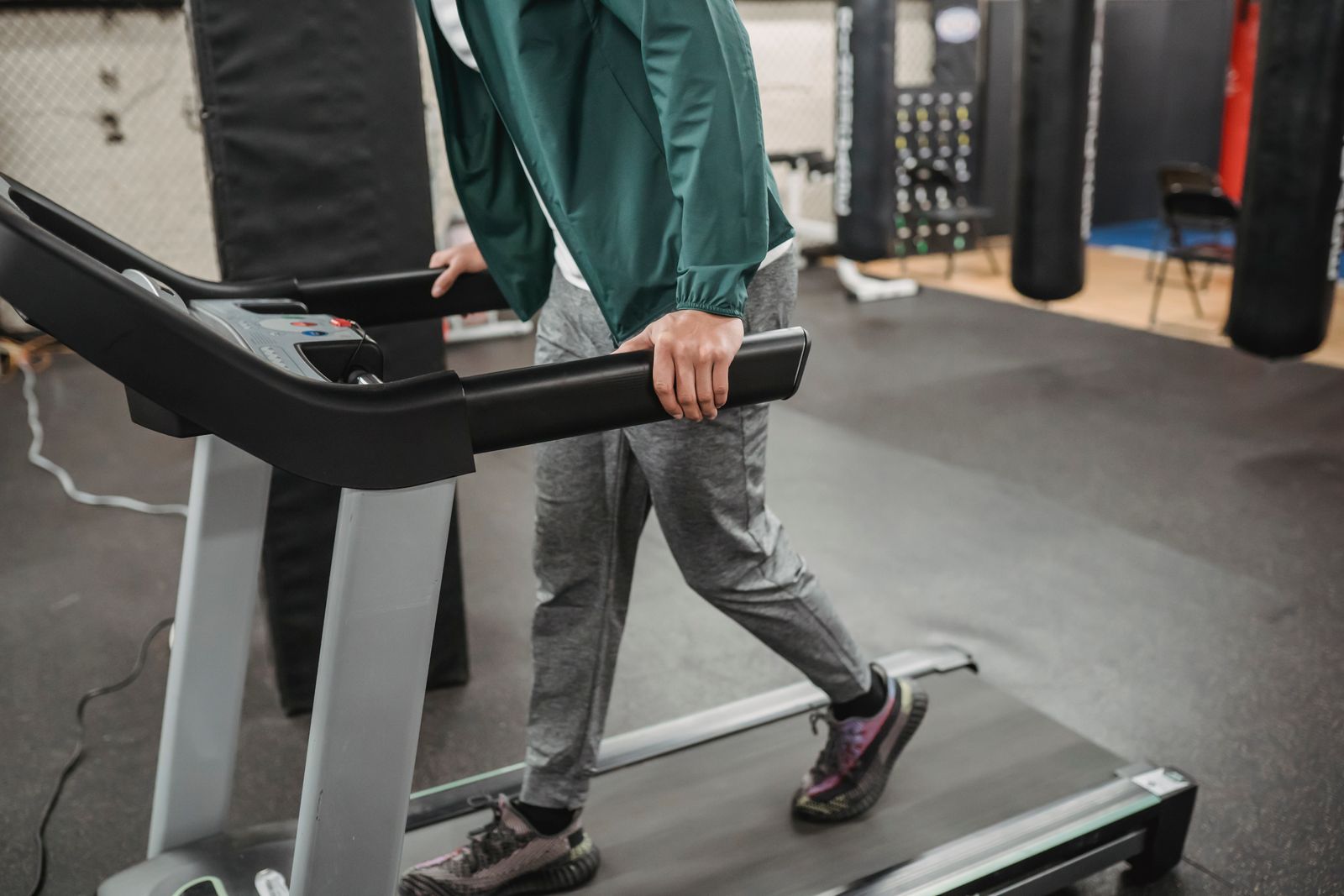
Running indoors on a motorized belt involves complex interactions between human stride dynamics and rigid steel machinery. Every time a foot strikes the running surface, hundreds of pounds of force transfer directly into the frame. Manufacturers insert specialized dampening materials between the user and the metal base to alter this energy transfer.
Understanding these internal mechanics reveals why some running decks feel like marshland while others mimic rigid pavement. Different brands use distinct engineering philosophies to manage impact shock. Examining these mechanisms requires looking past plastic shrouds and into the actual hardware bolted beneath the belt.
The Role of Elastomer Cushions
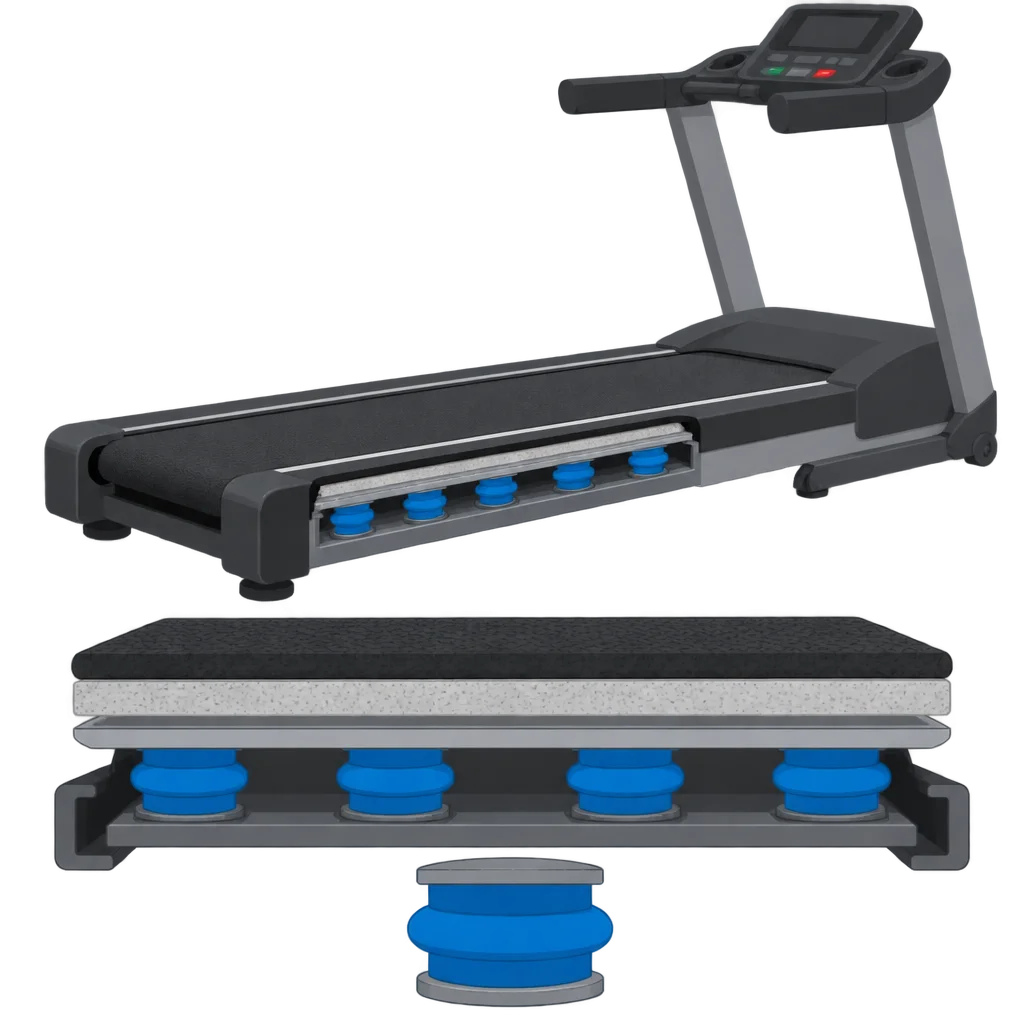
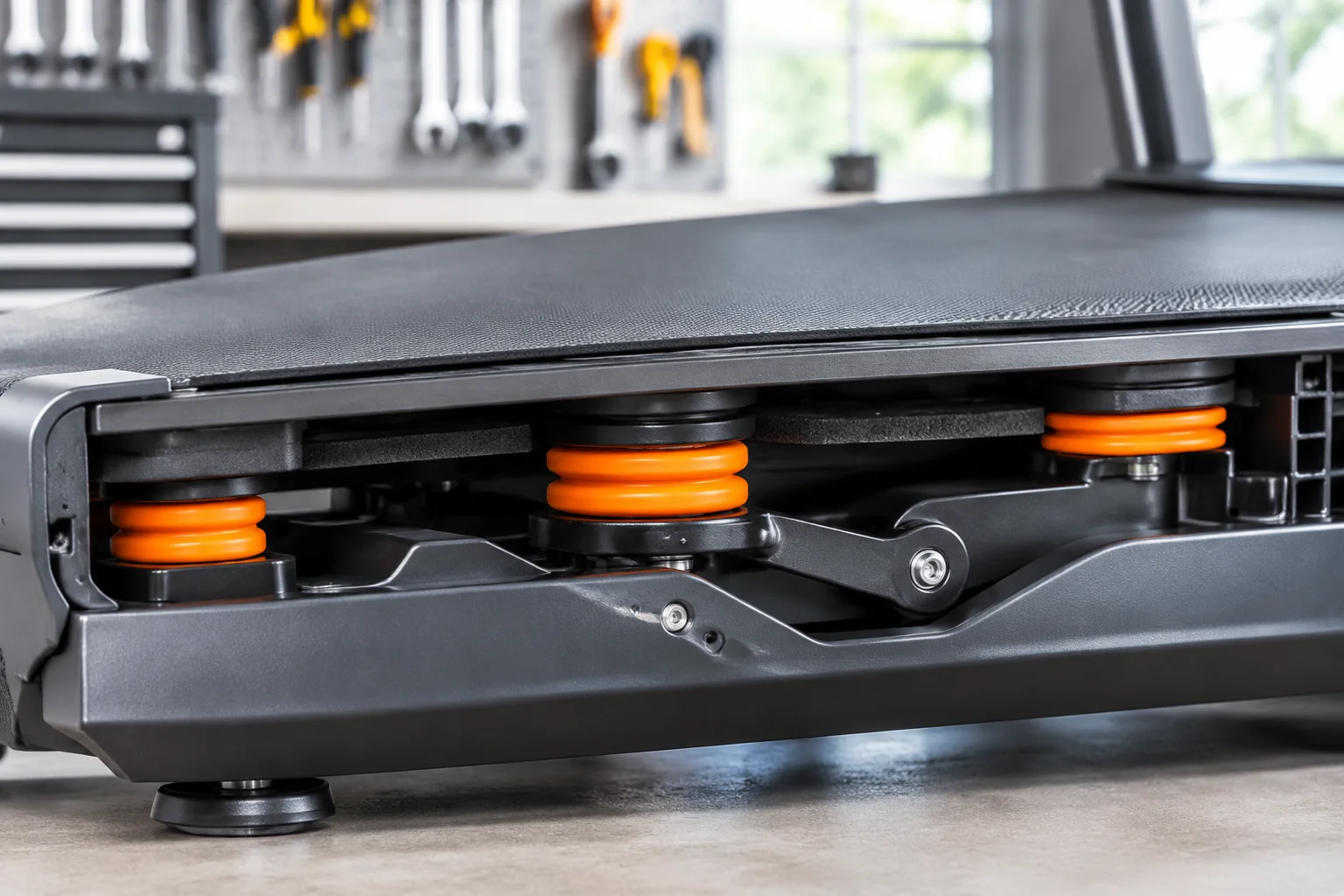
Elastomers form the backbone of modern shock absorption. These synthetic rubber cylinders or blocks sit at strategic points beneath the running deck, usually concentrated around the midpoint where foot strikes peak. When weight presses down on the belt, the elastomer compresses, absorbing kinetic energy before it reaches the rigid structural frame.
Material density determines how these rubber elements behave under load. Softer compounds yield easily, offering a plush sensation that absorbs significant initial impact. Firmer polyurethane blocks resist compression, returning energy rapidly to the runner. Over time, these polymers degrade through continuous cyclic loading, losing their original elasticity and changing the overall feel of the machine.
Mechanical Springs and Air Dampers
Beyond simple rubber blocks, advanced machines incorporate mechanical steel springs or pneumatic cylinders. Steel springs provide linear resistance, meaning the force required to compress them increases proportionally with displacement. This setup creates a very distinct bounce that differs entirely from the deadening effect of solid rubber.
Pneumatic dampers introduce fluid resistance into the equation. As the deck moves downward, a piston forces air through a restricted valve inside a sealed cylinder. This design controls the rebound speed, preventing the running deck from springing back violently against the bottom of the user's foot during toe-off.
Deck Flex and Structural Deflection
The running board itself acts as a massive leaf spring. Manufacturers construct these decks from high-density fiberboard or laminated wood composites designed to bend slightly under heavy loads. The physical thickness of the board, combined with its mounting points, dictates how much the center sags during a stride.
- Fiberboard core thickness determines overall rigidity
- Mounting brackets dictate pivot and flex points
- Surface coatings reduce friction against the belt
- Reinforced edges prevent lateral twisting forces
- Underframe crossbeams stabilize the primary load
- Rubber grommets isolate board vibration from steel
When a deck bends too much, stability suffers. Excessive deflection forces stabilizing muscles to work harder as the surface shifts unpredictably beneath the foot. Engineers constantly balance this trade-off between shock reduction and structural stability.
Surface Perception and Kinetic Feedback
The brain evaluates running surfaces through sensory feedback gathered in the joints and muscles. When a treadmill absorbs too much energy, the lack of firm resistance tricks the nervous system into altering stride mechanics. Runners often compensate unconsciously for excessively soft decks by pushing harder into each stride.
Road running provides a completely unyielding surface, forcing the body to absorb total impact forces directly. Treadmill manufacturers attempt to replicate outdoor conditions while protecting joints from repetitive shock. Studying these mechanical differences helps clarify why every treadmill model feels unique underfoot.
Inspecting the hardware hidden beneath the running belt uncovers the true engineering priorities of any manufacturer. Quality dampening relies on precise material science rather than empty marketing promises, proving that mechanical design ultimately dictates every single step taken indoors.










Comments
I always wondered why my knees felt completely different on various gym treadmills. Reading these mechanical breakdowns finally cleared up how elastomer blocks and steel frames interact under impact.
Andriy Melnyk
Data Researcher
The explanation of deck flex changed how I look at fitness equipment specifications. It is refreshing to read pure physics and material science instead of sales pitches.
Yuliia Boyko
Editor in Chief